


ASTM vs ISTA - How to Select the Right Distribution Simulation Testing Standard
ASTM vs ISTA - How to Select the Right Distribution Simulation Testing Standard
Executive Summary
Distribution simulation testing plays a critical role in validating that medical devices and sterile packaging systems can withstand real world hazards they encounter during shipping, including atmospheric conditions such as temperature and relative humidity (RH), as well as vibration, shock, compression, and other environmental stressers.
ASTM and ISTA provide two of the primary sets of standards for distribution simulation testing, but they differ significantly in structure, flexibility, and intended applications. Selecting the appropriate test method is essential for aligning distribution testing with a product’s anticipated distribution pathway while meeting regulatory expectations for sterile barrier system validation.
This TechTip outlines the key differences between ASTM and ISTA standards, provides guidance on selecting the right method, and explains how each approach supports ISO 11607 compliance and reliable packaging validation.
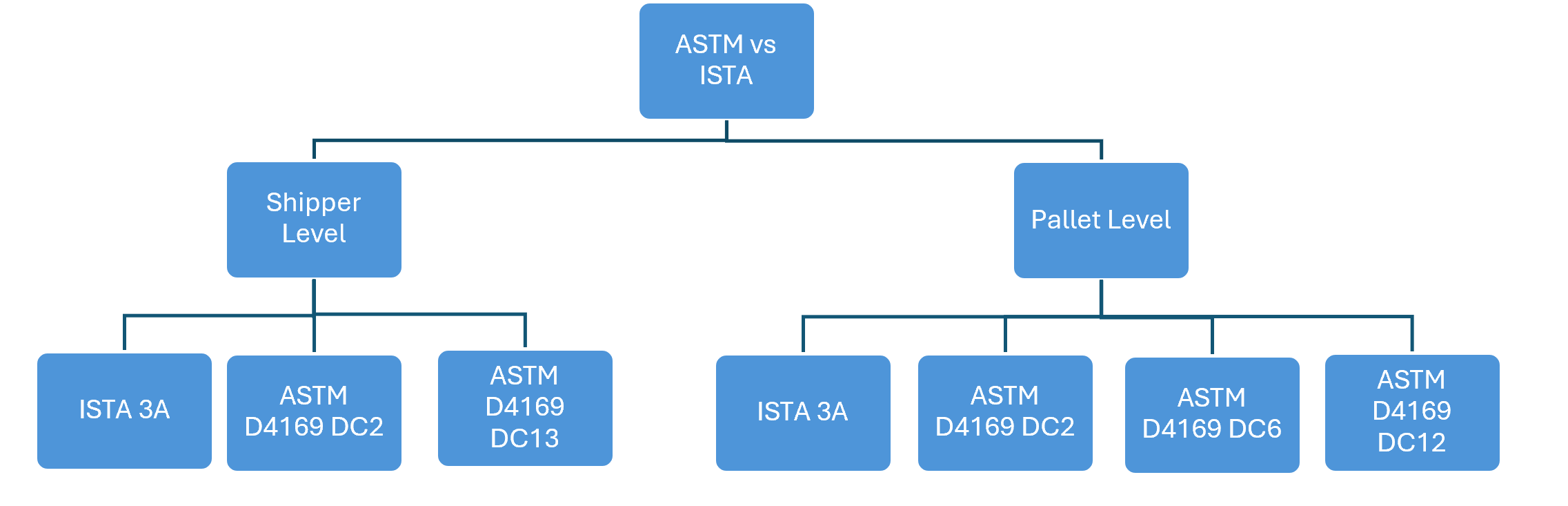
How do manufacturers select the right distribution simulation test method?
Selecting the most suitable distribution simulation method requires a risk based assessment of the device, packaging configuration, transportation route, and regulatory expectations, ensuring that the chosen method not only challenges the packaging appropriately but also supports a compliant and reliable validation strategy under ISO 11607.
What are the key actions when selecting and executing ASTM or ISTA testing protocols?
Before defining a distribution simulation protocol, manufacturers should complete the following actions:
- Collaborate closely with your testing laboratory to fully understand and establish the specific test procedure that will be used to evaluate and validate your shipping configuration
- Develop a clear justification and documented strategy for why a particular testing protocol and sampling plan has been selected, ensuring it aligns with regulatory expectations and supports a compliant validation under ISO 11607
- Sterilize representative test samples using established process parameters for use in the testing study
- Prepare an adequate quantity of test samples to satisfy sampling requirements, and allocate a suitable number of spare samples as contingency
- Conduct feasibility or preliminary testing before investing in a full performance study to identify potential risks early and avoid costly rework
- Ensure sufficient time is allocated to complete a thorough validation
- Evaluate and track the rate of defects or damage occurring during the shipment of sterile samples to Customers or end users to assess whether your packaging system is performing as intended
How do ASTM and ISTA compare in common distribution scenarios?
This comparison highlights differences in shipment type coverage, customization, handling complexity, regulatory fit, and suitability for parcel, palletized, and multimodal shipping environments in common distribution scenarios.
ASTM vs. ISTA Side by Side Distribution Simulation Comparison
Category | ASTM D4169 | ISTA 3E | ASTM D7386 | ISTA 3A |
|---|---|---|---|---|
Shipment type | Parcel / shipper, palletized products, by truck, air, rail, sea for Less Than Load/Total Load (LTL/TL) and multimodal routes (air + truck, rail + truck). | Unitized pallet loads shipped as Full Truck Load (FTL). | Single shipper / e‑commerce / parcel packages in parcel delivery system. | Single shipper / e‑commerce / parcel packages in parcel delivery system. |
Best for | All packaging types include pallet and single shippers including e‑commerce, medical devices, and pharmaceuticals on complex or multimodal routes | Palletized unit loads with focus on pallet stability. Including medical devices and pharmaceuticals on complex or multimodal routes | Postal or courier parcel shipments including e‑commerce, medical devices, and pharmaceuticals in small single packages. | Consumer parcel networks or single shippers including e‑commerce, medical devices, and pharmaceuticals in small single packages. |
Strengths / Customization | High customization when appropriate Distribution Cycle (DC) and Assurance Level (AL) are applied, with multi‑hazard coverage. | Low customization due to prescriptive pallet protocol. Simulates freight / LTL with forklift and impact hazards and represents Full Truck Load (FTL) pallet movements. | Moderate customization Simulates parcel delivery protocols, offering strong small package hazard while modelling couriers but with less flexibility than D4169. | Low customization due to prescriptive fixed sequences for standard / small / flat parcels. Offers test sequences that reflect parcel carrier conditions for consumer parcel. |
Altitude / pressure | Yes, where applicable. Product and packaging dependent | No. | Yes. Product and packaging dependent | Yes (With random vibration (optional)). |
Handling complexity | Supports mixed freight and multimodal shipping. | General simulation for large, bulky, or palletized freight. (Use of additional pallet for compression test is optional) | Small parcel delivery simulation for shipper / parcel only. | Small parcel delivery simulation for shipper / parcel only. |
Regulatory fit | FDA recognized consensus standard for pallet, shipper / parcel packaging validations. Listed in ISO 11607-1 Annex B standardized test methods. | FDA recognized consensus standard for pallet Full Truck Load (FTL) simulation. | FDA recognized consensus standard for single parcel validations. Listed in ISO 11607-1 Annex B standardized test methods. | FDA recognized consensus standard for single parcel packaging validations. Listed in ISO 11607-1 Annex B standardized test methods. |
When should manufacturers engage packaging testing TechTeamSM Technical Professionals?
Engaging experienced packaging and testing TechTeam Technical Professionals early in the process can assist manufacturers in navigating protocol selection, validation strategy, failure analysis, and remediation planning. Technical guidance supports efficient testing execution while strengthening regulatory confidence and validation defensibility.
Conclusion
ASTM and ISTA both play critical roles in distribution simulation testing. Understanding their differences and selecting the appropriate method helps ensure packaging performance, regulatory compliance, and supply chain confidence.