

a case study of gamma-irradiated oxybutynine
6 septembre 2016
Automated Quality Control of Active Pharmaceutical Ingredients (API) by LC-UV-ion trap MS using Compass Open Access: a Case Study of Gamma-Irradiated Oxybutynin
We're happy to publish the Application Note concerning the research carried out by our team at the Pharmaceutical Testing Laboratory in Utrecht, in conjunction with colleagues at the STERIS Gamma Sterilisation site in Ede, NL and the Bruker research lab in Bremen, on irradiated Oxybutynine.
Case Study: Gamma-irradiated Oxybutynine
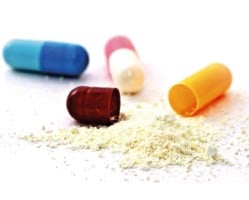
This case study was initiated after detection of an unknown degradation product in a gamma-irradiated sample of the anticholinergic drug oxybutynin hydrochloride during routine drug substance QC. The sample was qualified as being noncompliant with the specifications of the Ph. Eur. monograph 01/2005:1354 [1] which defines a limit of 0.1% for unspecified impurities. For the characterization of the oxybutynin degradation products by mass spectrometry an LC-UV-ion trap MSn method was developed. Using Bruker software such as MetaboliteTools (for advanced differential peak detection) and FragmentationExplorer (for interactive MS/MS spectrum interpretation) the impurities were identified as phenylcyclohexyl glycolic acid and cyclohexyl phenyl ketone (CPK). To the best of our knowledge this is the first time CPK has been described as irradiation product of oxybutynin.
For a comprehensive quality control of oxybutynin samples an automated workflow based on Bruker Compass OpenAccess QC software was established. The verification of the drug substance identity is based on its molecular formula and MSn spectral library matching; the identity of the impurities is verified by UV and MS spectra matching as well. The purity of the oxybutynin samples is determined by UV detection at 210 and 254 nm. Authors Joop C.Hoogvliet, STERIS Pharmaceutical Laboratories, Utrecht, The Netherlands; Annemiek C. Kosse, Department of Pharmaceutical Sciences, Utrecht University, Utrecht, The Netherlands; Rob van der Heijden, Bruker Nederland BV, Leiderdorp, The Netherlands; Zoltan Czentnar and Andrea Kiehne, Bruker Daltonik GmbH, Bremen, Germany Bruker Daltonics is continually improving its products and reserves the right to change specifications without notice. © Bruker Daltonics 08-2016, LCMS-115, 1845541 Application Note LCMS-115 Automated Quality Control of Active Pharmaceutical Ingredients (API) by LC-UV-ion trap MS using Compass Open Access: a Case Study of Gamma-Irradiated Oxybutynin Keywords Instrumentation and Software Pharma QC amaZon SL automation Compass OpenAccess oxybutynin FragmentationExplorer impurity profiling APCI gamma sterilization MetaboliteTools API The results of this case study on gamma-irradiated oxybutynin clearly illustrate the additional value and complementary character of ion trap mass spectrometry in addition to UV detection for drug substance QC.
À propos de STERIS
STERIS est l'un des principaux fournisseurs mondiaux de produits et services destinés aux soins des patients, avec un accent particulier sur la prévention des infections.
NOUS AIDONS NOS CLIENTS À CRÉER UN MONDE PLUS SAIN ET PLUS SÛR en fournissant des produits et services innovants dans le domaine des soins de santé et des sciences de la vie à travers le monde.
Pour plus d'informations, rendez-vous sur www.steris.com.
Related Posts